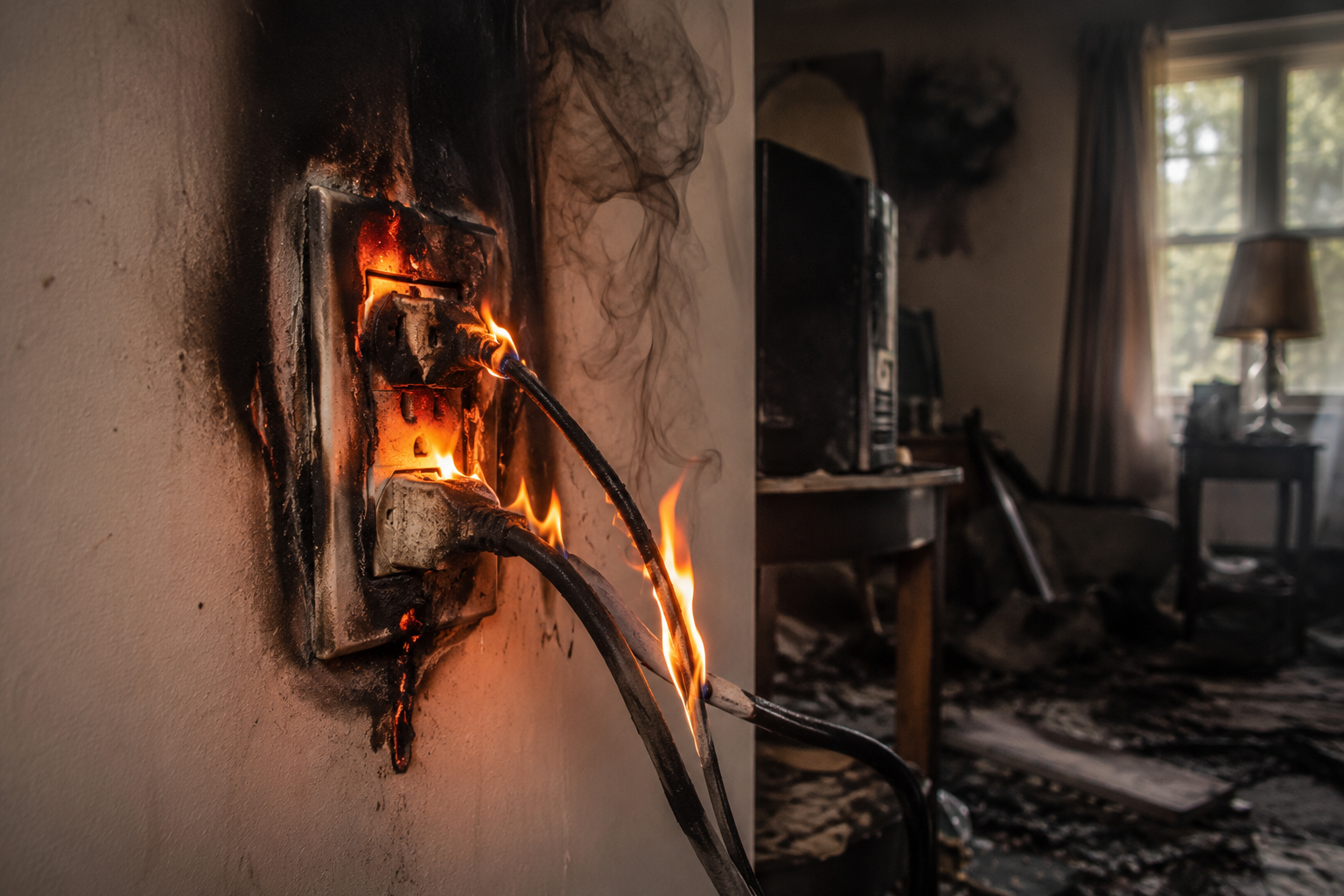
Why Electrical Shorts Are More Common in Florida — And How to Stop Them Before They Start a Fire
I never had to think about electrical contact oxidation until I moved into a humid environment. It’s not something that comes up in a drier climate — but here, it’s one of the most common, least-talked-about fire risks sitting quietly behind outlets and panels in almost every home.
What’s Actually Happening
It’s not the humidity itself that’s dangerous — it’s what humidity does to metal over time. Moisture in the air reacts with the metal contacts inside outlets, breakers, and panel connections, forming a thin oxidized layer. That layer isn’t a good conductor. As it builds up, it increases electrical resistance at the connection point.
Higher resistance means more heat every time current passes through. More heat means arcing. Arcing is what starts fires. This isn’t a cosmetic issue — a corroded connection is a slow-building fire hazard, even when everything looks fine from the outside.
Why This Hits Florida Homes Harder
- Florida’s humidity regularly sits between 70-90%, giving moisture constant opportunity to reach electrical contacts
- Salt air near the coast is conductive and chemically aggressive toward metal, accelerating corrosion well beyond what inland homes experience
- Outdoor outlets and fixtures are especially exposed — sun and UV exposure make outdoor outlet covers brittle over time, and cracked plastic lets moisture reach the contacts even faster
- Older aluminum panels are particularly vulnerable — aluminum forms an oxide layer that actively insulates rather than conducts, which is a serious problem inside a panel meant to carry current safely
Warning Signs Worth Taking Seriously
- Outlets that spark when you plug something in
- Breakers that trip without an obvious cause
- Flickering lights, especially outdoors or after rain
- A burning smell near an outlet, switch, or panel
Discolored or warm-to-the-touch outlet covers
Regular Maintenance That Actually Prevents This
- A routine electrical inspection every 1-2 years catches corrosion while it’s still a cheap fix, not an emergency
- Weather-resistant, GFCI-protected outlets for anything outdoors or in damp areas (garage, laundry, bathrooms)
- Proper sealing on outdoor fixtures and panel enclosures to keep moisture from reaching contacts in the first place
- If your panel is original to a home built decades ago — especially an aluminum panel — it’s worth having it evaluated. Panels that would last fifty years in a dry climate wear out much faster here
The Bottom Line
This isn’t about being alarmist — it’s about understanding that Florida’s climate puts a real, ongoing demand on your home’s electrical system that homes in drier climates simply don’t face. A little regular attention catches this early. Ignoring it doesn’t make it go away; it just makes the eventual fix more expensive, or worse.
If You’re an Electrical Contractor Reading This
This is exactly the kind of search a Florida homeowner runs the moment they notice a spark or a warm outlet cover — and it’s a search happening constantly, not just after a storm. If your Google Business Profile isn’t the one showing up when that search happens, that’s exactly what we fix.
How To Get Started.
Click Here to Schedule a Free Audit
Find out what’s costing you calls.
Leave a Reply